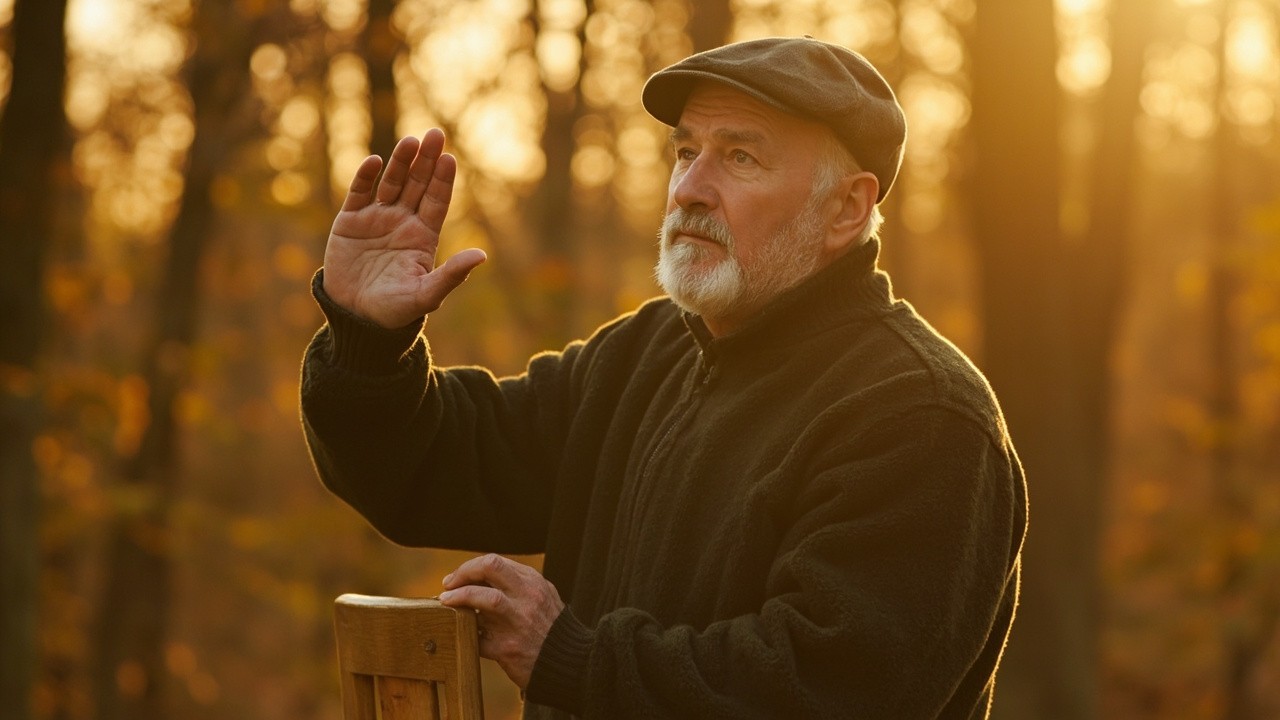
The hand that reaches for the rail without thinking. The pause at the top of the step. The slow-down on the gravel path, and the small quiet worry that sits behind it: what if I go down one day, and there’s no one here.
If that’s familiar, here’s the reassuring part. Tai chi for seniors is one of the most evidence-backed gentle ways to steady your balance and lower your risk of falling, and you can start today with a handful of slow movements, standing or seated, no experience or fitness needed. It works because the slow weight-shifts train your body to move its weight under control, which is the exact skill that keeps you steady on your feet.
You don’t need to become flexible or fit first. You don’t need a class or a floor to get down onto. A chair and a few minutes is enough to begin.
What is tai chi for seniors, and why does it help with balance?
Tai chi for seniors is a slow, gentle form of movement where you shift your weight and move your arms in smooth, unhurried patterns, done standing or seated. It helps balance because each slow weight-shift teaches your body to control where its weight sits, which is the skill that keeps you upright when the ground is uneven or you turn quickly.
Most falls in later life aren’t dramatic. They happen in the ordinary moments: rising from a chair, turning in the kitchen, stepping off a kerb. In each of those, your body has to move its weight from one foot to the other without wobbling. That is precisely what tai chi rehearses, over and over, at a speed slow enough to be safe.
Because it’s low-impact and adaptable, it suits stiff hips, tired knees, and cautious bodies. You go as slow as you like. You stop when you like.
Why unsteadiness happens, and what the research shows
Steadiness isn’t one thing. It’s your inner ear, your eyesight, the sensors in your muscles and joints, and the strength to correct yourself, all working together in a fraction of a second. As we age, those signals slow and quieten, so the body reacts a beat late, and that beat is often the difference between a wobble and a fall.
Tai chi trains the whole system at once. The slow, deliberate movements give your body time to feel where its weight is and practise correcting it, which sharpens the sense of position (called proprioception) and the reflexes that catch you.
The evidence here is unusually strong. A 2023 systematic review and meta-analysis of randomised trials found tai chi is an effective exercise for preventing falls and improving balance in older adults, whether they are healthy or at high risk, published in Frontiers in Public Health. A large trial reported by Stanford Medicine found a tailored tai chi program cut falls by 58 percent compared with stretching. Few gentle practices carry numbers like that.
What older practitioners already understood
That worry about a fall isn’t only in your head, and it isn’t only in your muscles. It lives in how your body organises itself to move, and the people who built tai chi centuries ago understood movement as something you sink and root, not something you rush.
In my years of teaching, the shift I see most often isn’t strength, it’s trust. People arrive holding their breath and locking their knees, bracing against the fall they fear. When I work with older beginners on slow weight-shifts, they start to feel their own weight settle into the standing leg, and something eases. The body stops fighting itself.
That rootedness is the old idea and the modern finding at once: steadiness is a skill you practise, not a gift you lose. QiGuide teaches this the same body-first way, and if you want to see how it connects to broader gentle practice, this qigong for beginners routine is a good companion piece.
Try this: a slow weight-shift near a chair
This is a simplified Wave Hands Like Clouds, the core balance-trainer. Do it standing behind a sturdy chair with a hand resting on the back, or seated if you prefer. Go slow. Stop any time.
- Stand with your feet about hip-width apart, one hand lightly on the chair back. Let your knees soften, not lock.
- Slowly shift your weight onto your right foot. Feel the sole of that foot take the load. Pause and notice it.
- Just as slowly, let your weight drift back across to your left foot. Keep it smooth, like pouring water from one cup to another.
- As you shift, let your hands drift gently across in front of you, one rising as the other lowers, soft and unhurried.
- Continue for one to two minutes, following your breath. If standing feels like too much today, do the same weight-shift seated, pressing gently into one hip then the other.
The goal isn’t to get it right. It’s to feel your weight move under control. That felt sense is the steadiness you’re building.
How this differs from general qigong
Tai chi and qigong overlap, but this practice is specifically the balance-and-fall-prevention path for older bodies. If you’re weighing the two, this tai chi vs qigong comparison lays out the difference. And if you notice how much tension you carry while bracing against a fall, here’s why the body holds onto stress like that.
A few movements worth knowing by name, each doable standing or seated:
- Commencement: a slow rise and fall of the arms with the breath, to settle and centre you before you begin.
- Wave Hands Like Clouds: the slow side-to-side weight-shift above, your core balance-trainer.
- Parting the Wild Horse’s Mane: arms opening on a gentle diagonal with a soft turn, loosening stiff hips and shoulders.
- Tai Chi Walking: slow, deliberate heel-to-toe stepping with the weight fully transferred, which carries straight into safer everyday walking.
Where to go from here
Start small. A few slow weight-shifts near a chair, most days, will do more than a single long session ever could. Let it be gentle, let it be seated when you need, and let steadiness build at its own pace.
Get the free breathing guide →
Three gentle breaths to settle the body a wobble puts on alert, printable to use standing or seated and made to pair with the free timer.
If you’d like a structured plan to follow, the Tai Chi for Seniors printable guide walks you through gentle balance and fall-prevention movements you can do standing or seated at home. For days when standing is not the right call, the Gentle Chair Yoga for Seniors guide is six slow seated yoga poses you can do in any sturdy chair, with a follow-along audio so you can just breathe and follow. And when you want short guided practices in your pocket, Open QiGuide and begin with a few slow minutes today.