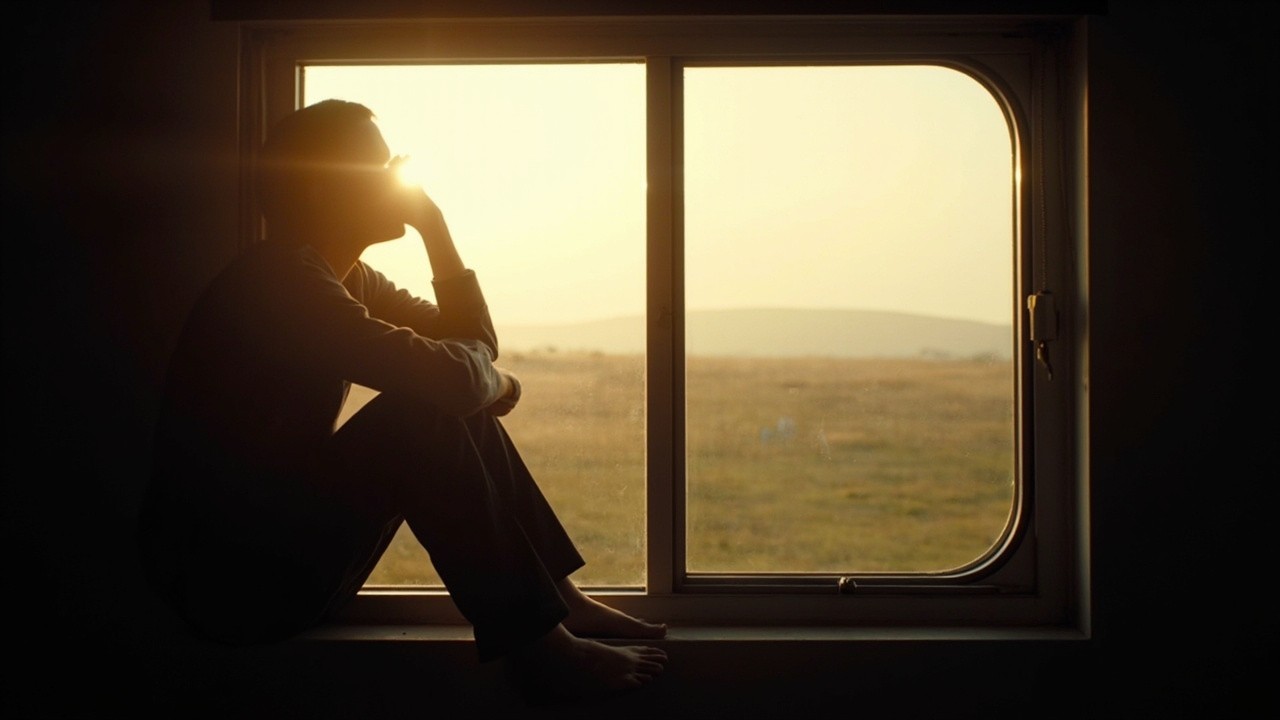
You are past the point of “just tired.” You crashed. Now even small things, a text you owe, deciding what to eat, feel like too much to lift.
And the worst part is that the one thing everyone keeps telling you to do, rest and wait, does not seem to be working on any timeline you can feel.
When Resting Stops Working
Severe burnout is the stage past ordinary exhaustion. By the time you reach it you have usually already stopped, or been forced to. You took leave, or you are dragging yourself through days that used to be easy.
Mornings are heavy. Small decisions feel enormous. You get one good afternoon, decide you are finally back, then crash for two days and decide you are broken.
The advice makes it worse. Rest more, when you are already resting. Be patient, with no sense of how long. Set boundaries, when you already collapsed past the point where boundaries would have helped.
Here is what almost no one tells you. Severe burnout recovery has a shape, and that shape is slow, uneven, and easy to misread as failure. People relapse not because they did it wrong, but because they treated a months-long nervous system process like a long weekend. The not-knowing becomes its own stressor, and stress is the one thing a depleted system cannot afford right now.
What Your Nervous System Is Actually Doing
In severe burnout your autonomic nervous system has shifted into a sustained conservation state, often a dorsal vagal shutdown layered on top of long-running fight-or-flight activation. This is not laziness. It is a survival setting, the same one that pulls a chronically activated nervous system into the off-switch it cannot find.
Your HPA axis, the system that times your cortisol, has flattened. Instead of a clean morning rise that produces drive, you get a blunted, dysregulated curve, so you wake unrefreshed and feel falsely wired but tired by evening. Reviews of the biology of burnout describe exactly this kind of endocrine dysregulation rather than simple tiredness.
Your mitochondria, the cellular machinery that makes usable energy, throttle their output when the system reads ongoing threat, because conserving fuel is the protective move.
This is why recovery is slow and non-linear. These systems recalibrate on a biological clock, not a willpower clock. Research on chronic stress finds that activation runs high early, then the whole axis downshifts as the stress becomes prolonged. A single good day is a brief open window, not recovery. Real recovery is the gradual return of the cortisol rhythm and the slow reopening of energy production, and it happens only when the body receives repeated safety signals over weeks. Push into a good day with a full to-do list and you re-trigger the threat response, the curve re-flattens, and you relapse.
The Older Word for Spent Reserves
That hollowed-out depletion has a name in traditional practice too. Practitioners described a state of spent vital energy, a system that has emptied its reserves and cannot simply be willed back to fullness.
What they noticed centuries ago lines up closely with what we now call HPA-axis and autonomic depletion. You do not refill a drained system by demanding output from it. You refill it by reducing the drain and feeding it gently and consistently. Their instruction was never rest harder, it was stop spending, then nourish slowly.
In my years of practice I have noticed that the people who come in after a full collapse are almost always still trying to push, just more quietly. When I get someone to stop measuring recovery by how much they can do, and start measuring it by how safe their body feels, the relapses slow down. That wisdom maps onto why a staged, gentle protocol beats one heroic break here. It is the same accumulation logic behind how the body stores stress long before the crash, run in reverse.
The Three-Phase Recovery Map
Match the phase to where you actually are, not where you wish you were.
-
Phase 1, discharge and signal safety (roughly weeks 1 to 2). Once a day, lie down and breathe with a long exhale: inhale for 4, exhale slowly for 8, for 3 to 5 minutes. A longer exhale directly activates the parasympathetic brake, a mechanism well described in the respiratory vagal model of calm. Do nothing productive in this window. The felt marker for Phase 1: your shoulders or jaw drop slightly on their own during the exhale. That drop is your nervous system registering the safety signal.
-
Phase 2, gentle re-input (roughly weeks 3 to 5). Reintroduce tiny restorative movement without re-triggering threat. A 10-minute slow walk, ideally outdoors, once a day. Slow, not brisk. A gentle moving form like Ba Duan Jin, eight slow stretches done at an unhurried pace, suits this phase just as well when getting outdoors is too much. Add one short window of a single pleasant thing with no outcome attached. The marker for Phase 2: you finish the walk slightly more energised rather than emptied. If you feel emptied, you went too far. Scale back. That is data, not failure.
-
Phase 3, rebuild capacity (roughly week 6 onward). Slowly add load and test recovery using the one-third rule: do about a third of what you think you can, then stop while you still have something left. The marker for Phase 3: a busier day no longer costs you the next two.
Across every phase the rule is the same. Never spend a good day. A good day is a window, not a finish line. If you want a faster way to settle the body inside any of these phases, a few quick regulation tools help.
A Recovery That Paces Itself
QiGuide guides severe burnout recovery as a staged process, not a single reset. It helps you work out which phase you are actually in, paces your restorative practices so you stop spending your good days, and tracks your real recovery signals over weeks, so you can tell genuine progress from a passing good afternoon. Open QiGuide and start where your body actually is.
Get the free breathing guide →
The three breaths that anchor those Phase 1 resets, printable to lean on through the first fragile weeks and made to pair with the free timer.
For the restorative windows in Phases 1 and 2, the Sleep and Anxiety Meditation bundle gives you gentle guided audio to settle into without adding any load. A one-time download, nothing shipped.